

Joint Mobilisation
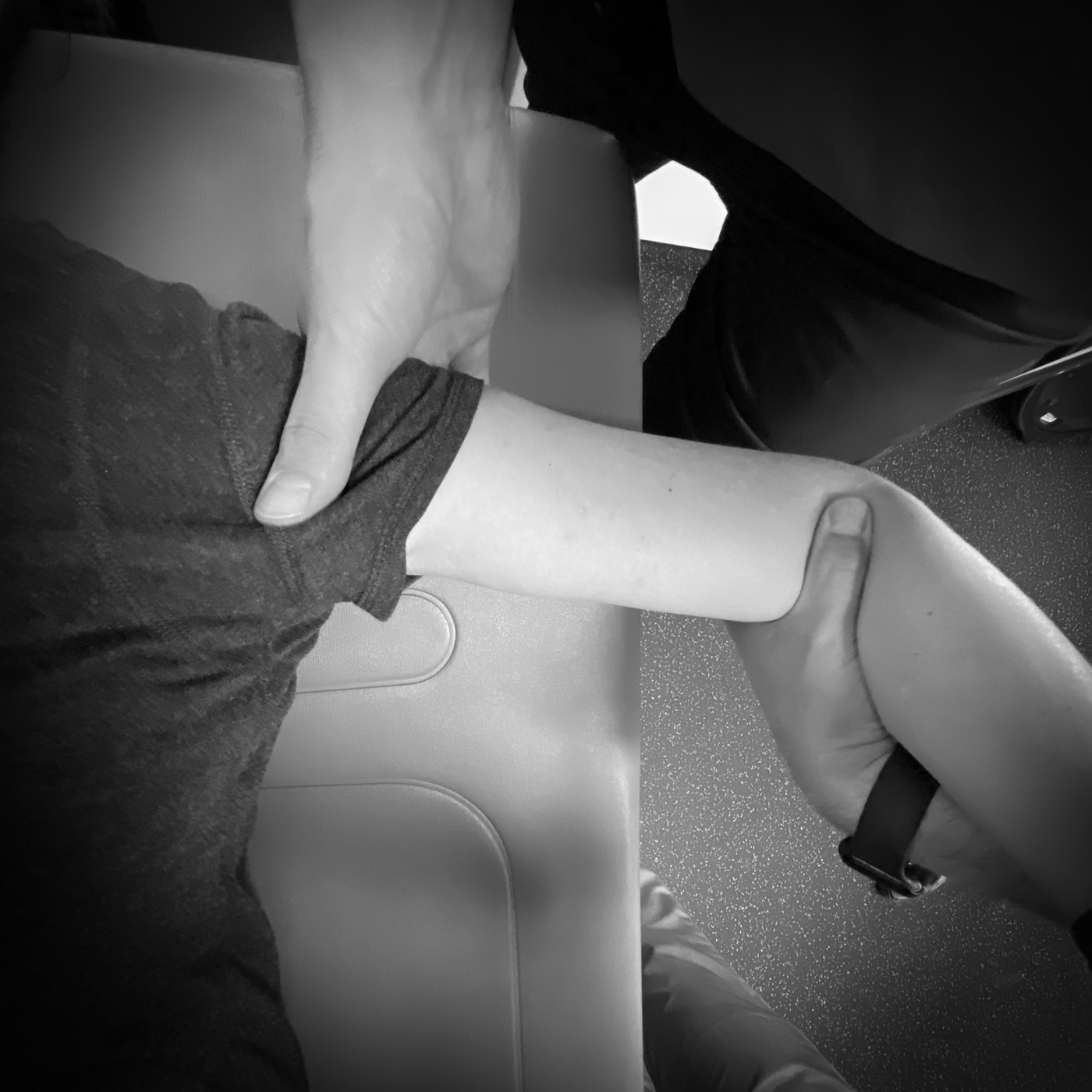
When done as a high velocity, low amplitude “thrust” it is known as a “joint manipulation”, with similar intentions of restoring optimal range of motion, function, and reducing pain in that joint complex.
Joint mobilisation and joint manipulation may both be used to improve joint mobility, improve joint biomechanics, help flush out inflammation from joints, and for pain relief.
Depending on which effects are desired, practitioners will vary the intensity and amplitude of the mobilisation or manipulation. According to the Maitland Joint Mobilisation Grading scale, a Grade 1 mobilisation consists of a small amplitude rhythmic oscillating mobilisation in the early range of movement. A Grade 2 mobilisation is a large amplitude rhythmic oscillating mobilisation done in the middle of the range of movement of that particular joint. A Grade 3 is a large amplitude rhythmic oscillating mobilisation to the point of limitation in the joint’s available range of movement. A Grade 4 mobilisation is a small amplitude rhythmic oscillating mobilisation done at the end of the available range of movement. A Grade 5, or a “Manipulation”, is a small amplitude, quick thrust done at the end of the joint’s available range of motion.
When done properly by an experienced clinician, joint mobilisation and manipulation are effective treatments for joint stiffness, spasming muscles, pain, and other common ailments.